

Turn intent into an agent architecture.
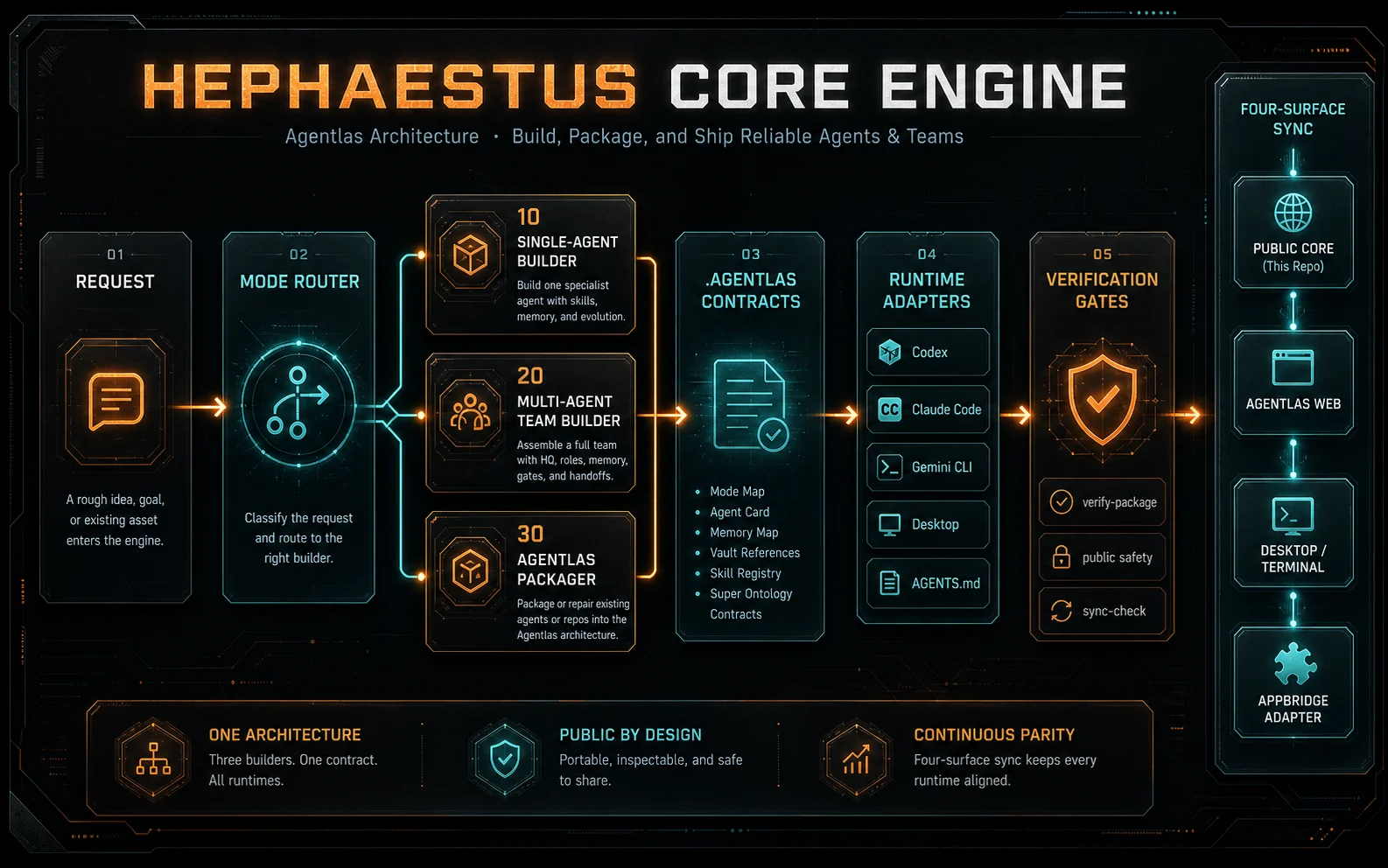
Hephaestus classifies the request, asks the missing setup questions, and emits the right shape: one agent, a multi-agent team, or a clean package with runtime adapters.
AGENTLAS MODEL 01 · AGENT OS
Agent OS inside Agentlas
Open Agent OS for Claude Code, Codex, and Cursor.
Meta-agent builder, A2A Hub router, Stormbreaker execution gates, project ontology, and memory/security gates in one local-first engine. Hephaestus builds agents, routes them across runtimes, gives them governed project context, and lets them improve only through verified memory and skill promotion.
curl -fsSL https://raw.githubusercontent.com/agentlas-ai/Hephaestus/v0.7.2/scripts/install-all-runtimes.sh | bashHephaestus is not a prompt generator. It is an operating layer for agents that have to build, route, verify, remember, and evolve inside real developer workspaces.
“An agent OS is the control plane around what agents may build, call, remember, and ship.”HOW THE ENGINE WORKS
Hephaestus combines a meta-agent builder, A2A routing, Stormbreaker, local ontology, and governed memory/security gates so agent creation becomes an inspectable operating system instead of a one-off prompt.
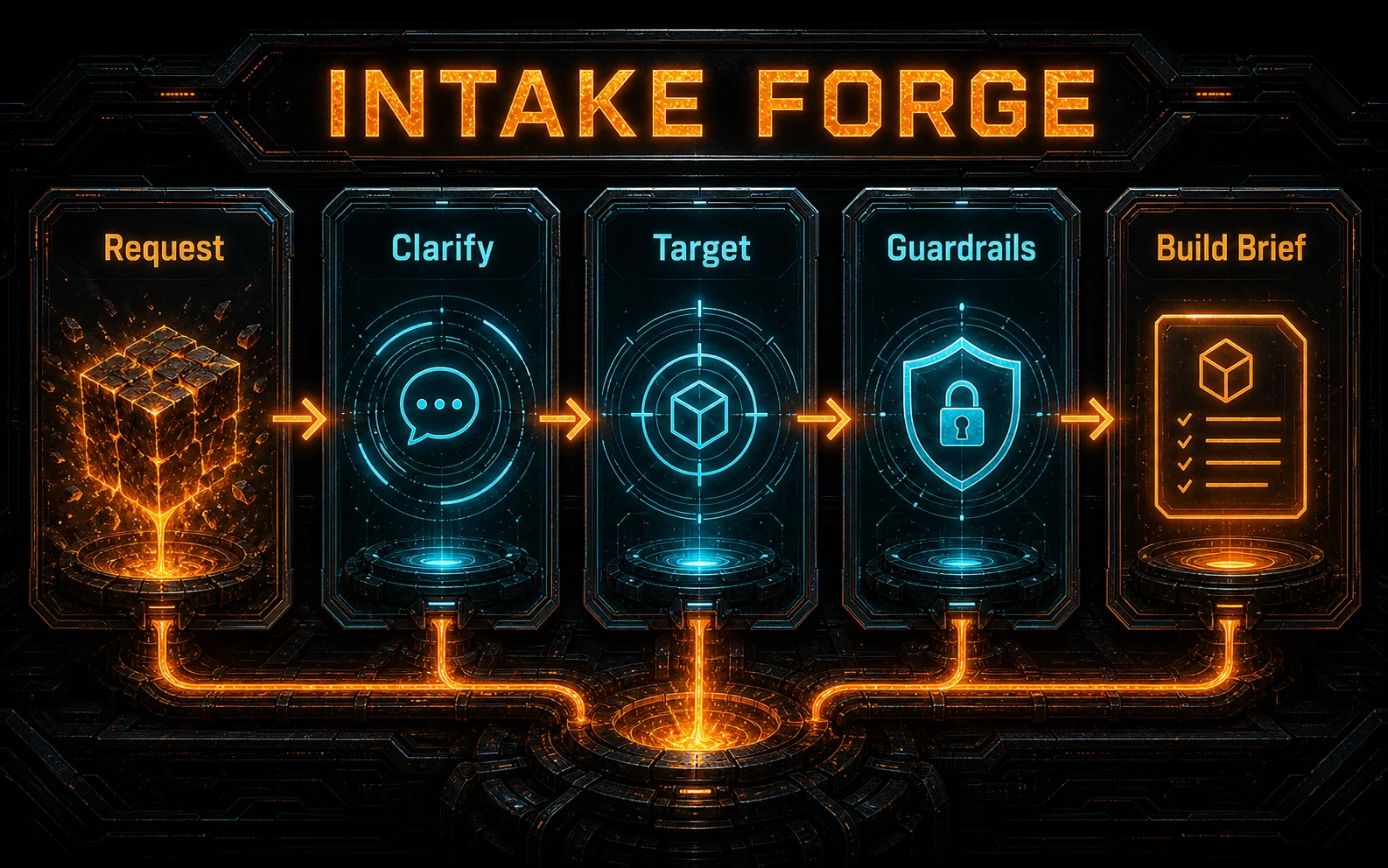
Hephaestus classifies the request, asks the missing setup questions, and emits the right shape: one agent, a multi-agent team, or a clean package with runtime adapters.
Hephaestus Network reads routing cards, prefers local agents, falls back to Agentlas Hub with redacted keywords when allowed, and writes receipts so every agent-to-agent handoff is traceable.
The ontology runtime indexes approved project sources into local graph and search state, so agents can query context, memory, and source lineage without sweeping unrelated folders.
Stormbreaker adds scope locks, failure-memory checks, verifier-first plans, bounded evidence loops, review gates, outcome ledgers, and final proof before substantial work can be called done.
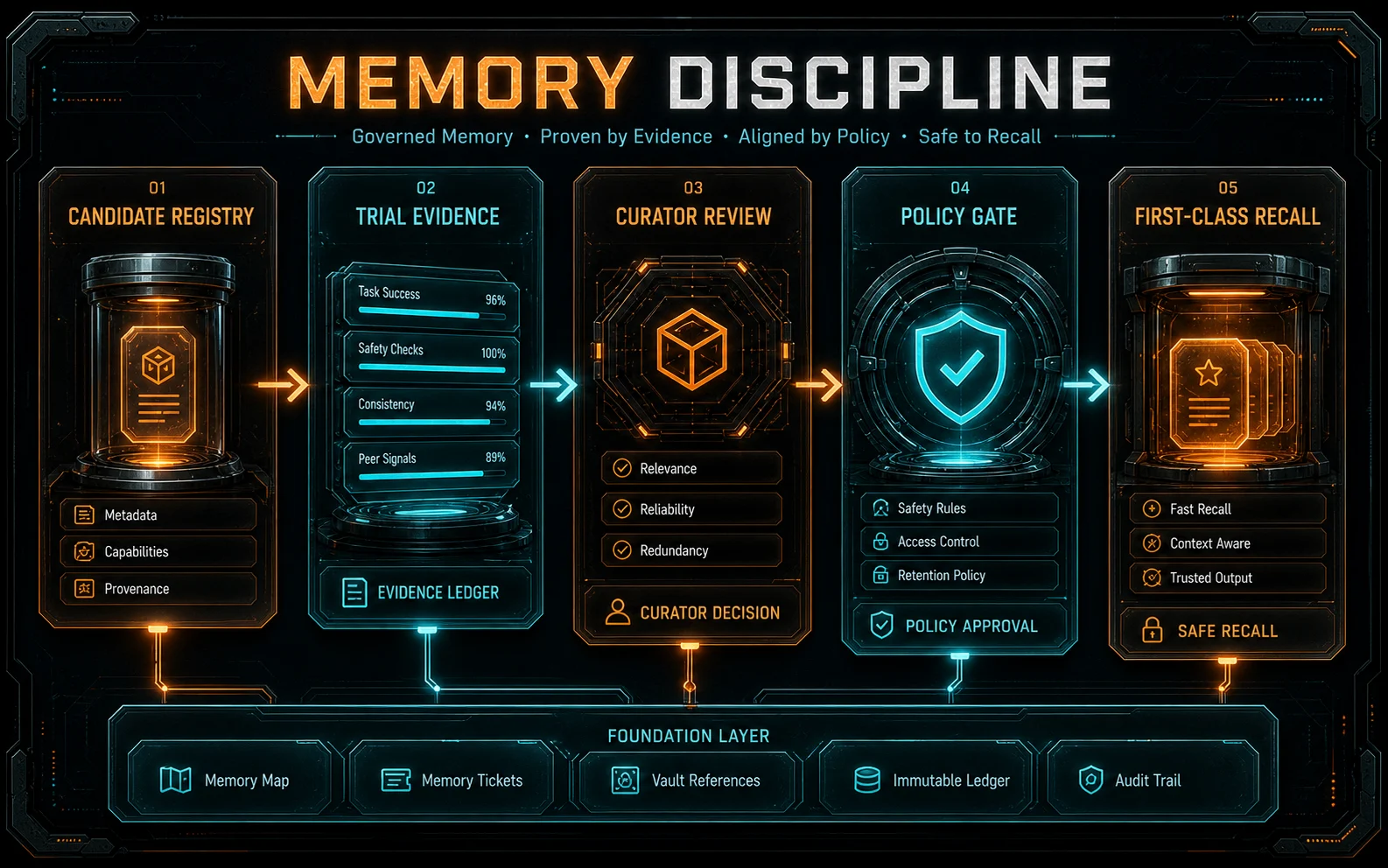
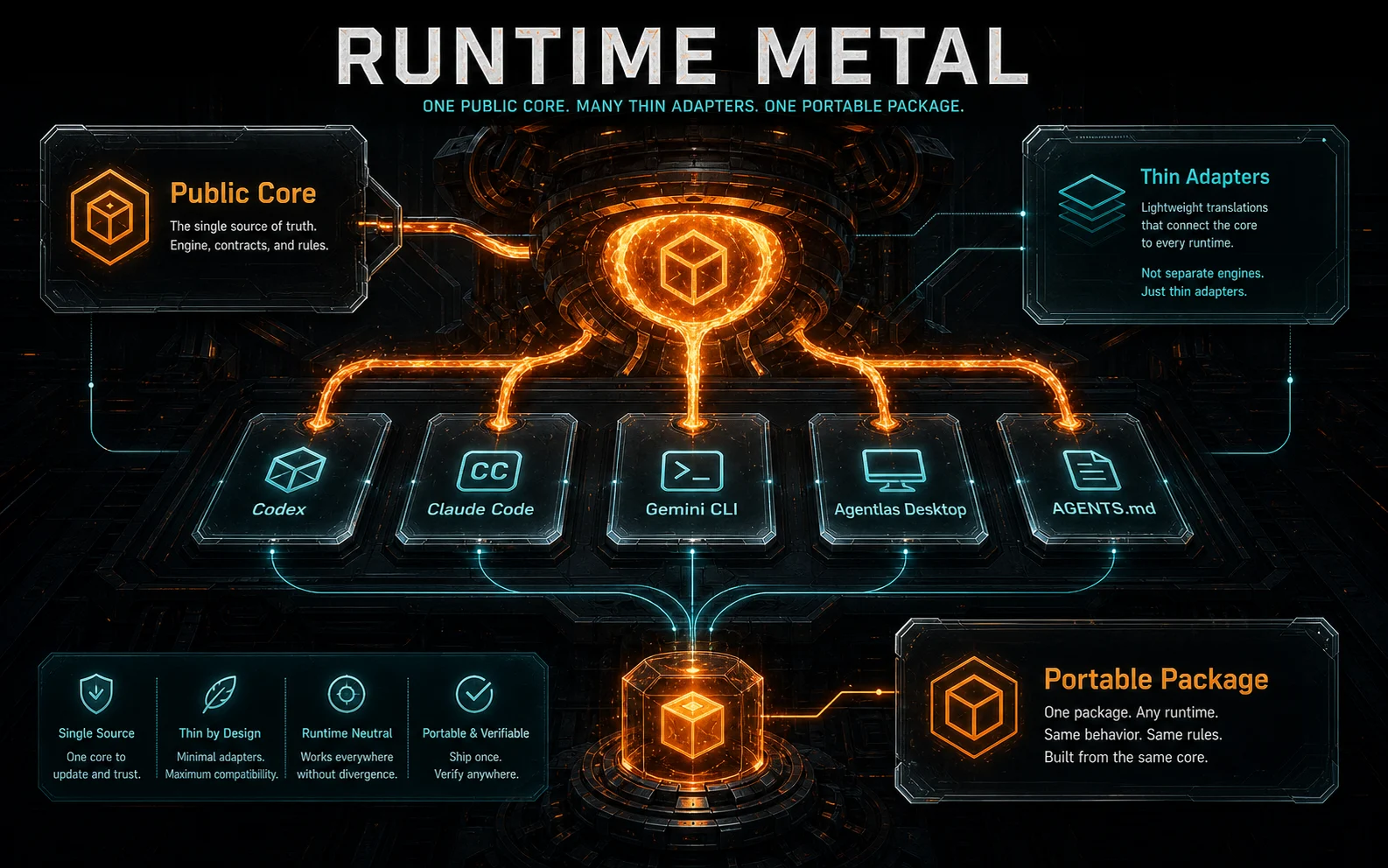
Memory admission, skill trials, security scans, and verification gates decide what an agent is allowed to keep, learn, call, or publish across Claude Code, Codex, Gemini CLI, Agentlas Desktop, and AGENTS.md.
WHAT'S INSIDE
Classifies the request and builds the right agent, team, or package shape
Routes requests through local cards first, then approved Agentlas Hub fallback
Hardens execution with scope locks, failure memory, verifier-first plans, and final proof
Turns approved project sources into local graph, search, and source-lineage context
Controls which memories, skills, and habits agents are allowed to keep
Runs scans, verification, and publish checks before anything ships
STORMBREAKER RESULTS
Stormbreaker is not a model replacement. It wraps the coding agent with scope locks, failure memory, verifier-first planning, evidence loops, review gates, and final proof so the run is harder to abandon halfway through.
WHY IT MATTERS
Agents, skills, memory contracts, and runtime adapters stay in plain files you can inspect, review, and change.
Agent-to-agent routing uses cards, approval boundaries, and receipts instead of silent black-box handoffs.
Stormbreaker turns scope, verification, failures, review, and final evidence into an operating contract.
Project context is admitted through local ontology and memory rules, not by letting agents wander through every folder.
New skills, durable memory, and publishable packages have to pass trials, security scans, and verification before they stick.
VISION
Agentlas is not only about creating agents. Hephaestus keeps the agent architecture, A2A routing, Stormbreaker execution gates, ontology, memory, and safety gates in plain structures you can inspect, change, and run on GitHub and on your own computer.
See the public code on GitHub